Can a Cat Sleep in a Carrier Overnight? When It's Safe and How to Set It Up
By the PetzyMart Team · Sources linked in the text · Last updated: September 8, 2026
It is ten at night. The discharge sheet says keep her confined. The only box in the house is the carrier she came home in.
Can a cat sleep in a carrier overnight? In a normal travel carrier, no. Not for a full night. In a crate or pen big enough for a bed, a litter tray and water, yes. But only for a real reason. A surgery recovery on your vet's orders. A new kitten's first nights. A hotel stop on a long drive.
The reason decides whether you should. The size and setup decide whether it is kind.
Below we cover three things:
- What the vet's instruction really means
- The setup that meets it
- The signs that mean open the door
Answer by Situation
Most people type a shorter version of this question. It is "is it okay to leave a cat in a carrier overnight tonight". The honest answer changes with the night you are facing.
| Your situation | Overnight in a travel carrier | Overnight in a crate or pen |
|---|---|---|
| Vet said keep confined after surgery | Only if it passes the size rule below | Yes, this is what most vets mean |
| New kitten, first nights home | No with the door closed; yes with it open inside one room | Yes, or one kitten-proofed room |
| Hotel or motel stop on a road trip | One night, only if it passes the size rule and holds a tray | Yes, a folding pen is the better tool |
| Cat is destructive or noisy at night | No | No, shut her in a room instead |
| Introducing a new cat to resident cats | No | Yes, a large crate in the shared room works |
Two of those rows are a flat no. A carrier as punishment fails. So does a carrier as a nightly bed for a healthy adult cat. Here is why:
🌅 Cats are most active at dawn and dusk
That is when a closed box hurts most.
😴 Cats sleep in short bursts
They get up to stretch, drink and use the tray. Then they sleep again.
A small box during those hours is a cage. The cat will tell you so.
For a healthy cat with no medical reason, use a bathroom or spare room instead. Shut the door. That is what "can I put my cat in a carrier at night" usually turns into. It happens once the owner hears the options.
Use a Crate, Not a Carrier
The word carrier does a lot of damage here. A travel carrier is built for an hour in the car. Its job is to hold a cat for the drive to the clinic. We cover that time limit in how long a cat can stay in a carrier. An overnight space has a different job. So it needs a different object.
| Feature | Travel carrier | Recovery crate or pen |
|---|---|---|
| Floor space | The cat fills it | Bed, tray and bowls with a gap between them |
| Litter access | None | Small tray in one corner |
| Water | Spills, or none | Bowl clipped to the bars, or a heavy dish |
| Ventilation | Front grille and side mesh | Open wire on every side |
| Door | One small opening | Full-height door, often two |
| Good for | The drive, the vet lobby | The night after surgery, kitten first nights, hotel rooms |
Most vets and fosters reach for one of two things:
Pick the overnight space by where you are
36-inch wire dog crateOpen on every side. Bowl clips to the bars. Folds flat in a closet.
Folding fabric pen, zipped roofPacks flat in the trunk. Sets up in one minute in a motel room.
Both fold away the rest of the year.
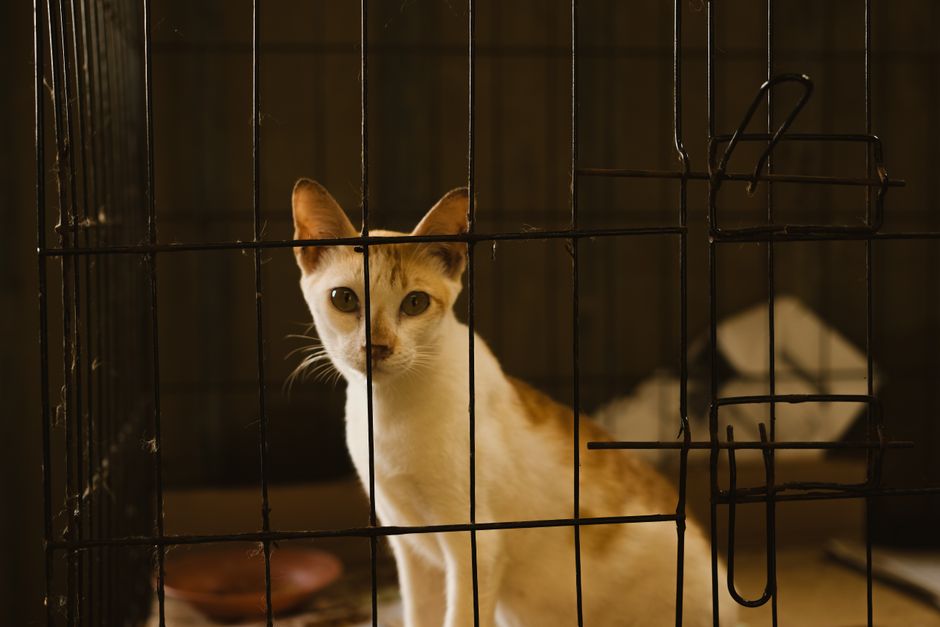
A travel carrier is a daytime tool. So is a body-close cat sling carrier for the walk from the front door to the car. Neither one is a bed. We never use either one for a full night.

Not for tonight
A sling is for the walk to the car, not the night.
The ComfyPaws sling holds a cat against your chest from the front door to the car, or the parking lot to the clinic. Soft cotton, adjustable strap, safety clip. A daytime tool. Tonight she needs the crate above.
See the ComfyPaws SlingSize the Space Right
International Cat Care's rule for any confinement is short. The cat must be able to stand at full height. She must be able to turn around. She must be able to lie down fully stretched out.
Here is how to measure:
-
1
Measure your cat lying on her side
Nose to tail base. Use a tape or a piece of string.
-
2
Add the length of the litter tray
The tray you will use tonight, not the big one.
-
3
That total is the minimum floor length
Shorter than that, and the tray touches the bed.
For most adult cats that lands at roughly 30 to 36 inches long. Height should be 22 inches or more. A kitten fits in less. But she will grow into the same crate within months. So buy the adult size once.
Does the carrier you own pass that test with a small tray inside? Then it is a crate in all but name. It can do one night. Most cannot. If the tray touches the bed, the space is too small.
Set Up the Overnight Space
Do this before the cat goes in. Not while she is crying.
-
1
Pick the room
Your bedroom, or a quiet room away from the front door, the washing machine and other pets. Rug or towel under it on tile.
-
2
Place the tray and the bed
Tray in one corner. Bed in the opposite corner. A foil tray or shoebox lid with an inch of litter is enough for one night.
-
3
Add water
Clip a bowl to the bars, or use a heavy ceramic dish. After surgery, food only as the discharge sheet says.
-
4
Use bedding that smells of her
For a kitten, something from her litter or the shelter. Wash nothing the night before.
-
5
Check the temperature
About 65 to 75 F. No direct sun, radiator, floor vent or door draught. After anaesthesia, drape a blanket over half the crate. No heating pad she cannot move away from.
Why: a cat coming off anaesthesia does not hold her heat well.
-
6
Cover the back and sides
A sheet, so she has a dark corner. Leave the front open so you can see her without opening the door.
Have a synthetic feline pheromone spray? Spray the bedding 15 minutes before she goes in. It is a calming aid, not a lock. The crate still has to pass the size rule.
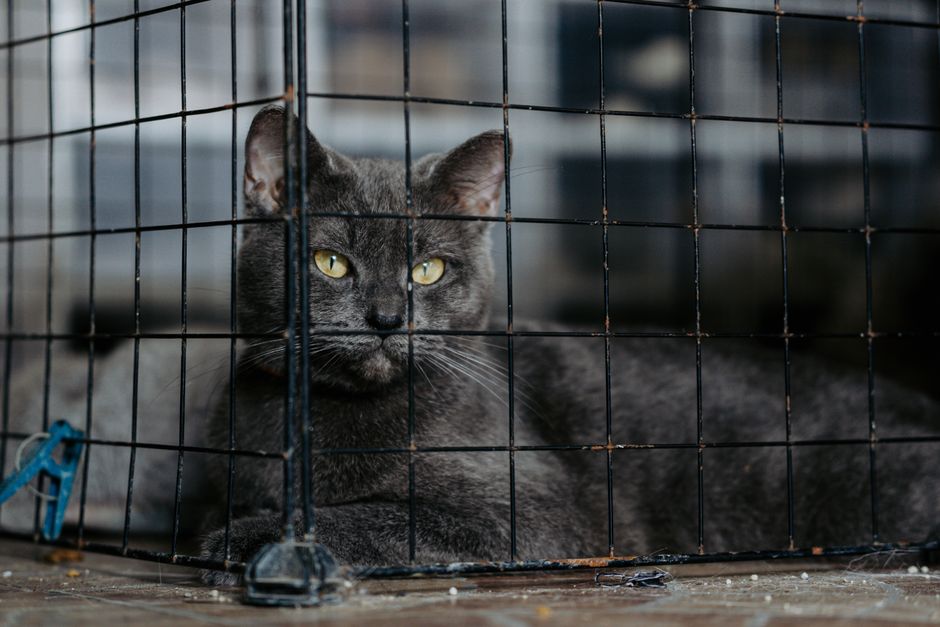
Then dim the lights. Stop talking to her. Most cats settle within 20 minutes once the room goes quiet.
Handle the Three Nights
After Surgery
"Keep her confined and quiet for 24 hours" is the most common line on a feline discharge sheet. It rarely means a locked carrier. It means four things:
- No jumping onto counters.
- No stairs at speed.
- No wrestling with another cat.
- A place where you can watch the incision and confirm she pees.
A crate in your bedroom does all four.
One night is the start, not the whole job
How long the vet's other rules run after a routine surgery
The crate is for the first night or two. The no-jumping rule runs up to two weeks. A big surgery means weeks; your vet sets the number.
VCA's guidance on caring for surgical incisions in cats is to check the wound for swelling, discharge or gaps. And to stop her licking it. The crate keeps the cone on. It keeps the cat where you can see her. Did the vet give a longer restriction? After a bone repair, for example? Then the crate becomes her room for that period. Give her supervised time out.
Questions about pain relief, sedation or a cat who will not settle are a phone call to the clinic tonight. Not a forum question. Most practices run an after-hours line for exactly this.
🩺 First 12 hours after surgery: call the clinic if you see
- Straining in the tray with nothing coming out
- A swollen belly
- Blood, on her or on the bedding
Once she is cleared, the days after surgery are also when the carrier association is most raw. The steps in rebuild trust with your cat after the vet start the day the crate goes away.
A Kitten's First Nights
Can a kitten sleep in a carrier overnight? With the door open, inside one closed room, yes. It is often the best setup for the first week. International Cat Care's advice on helping a new kitten settle in is to start in one quiet room. Leave the carrier there as a retreat. Line it with bedding that smells familiar.
The door stays open. A kitten needs the tray every few hours. A closed carrier makes her choose. Hold it, or soil her bed. The room is the confinement. The carrier is the den she chooses.
Should you put a kitten in a carrier at night with the door shut? Only if the room itself is not safe. Loose cables. A gap behind an appliance. Another animal you cannot separate. In that case use a crate or pen that passes the size rule. Put the tray inside. Treat it as a one-week bridge while you kitten-proof the room.
Expect crying on the first night. Most kittens settle within ten minutes once the room goes dark and no one answers. Crying that runs past 20 minutes is different. So is crying that restarts every time you move. That kitten needs the door open and your bedroom instead. The Cornell Feline Health Center covers feeding and health checks for the same first weeks.
A Hotel Stopover
A motel night in the middle of a two-day drive is the one time owners keep a cat in a carrier overnight. They do it because nothing else is in the car. Plan for it instead. A folding pen or a collapsible wire crate takes the same trunk space as a suitcase.
Is the carrier all you have? It does one night only if it passes the size rule. And only if you can fit a small tray. Otherwise let the cat out into the hotel bathroom. Put the tray and water in there. Leave the carrier door open. Shut the bathroom door. Check under the vanity and behind the toilet first.
Before the drive, teach the carrier as a safe place. Our stress-free cat transport plan does this over seven days. Then the hotel night is a known object. Not another new box.
Know When to Stop
Overnight confinement is a tool with an off switch. Open the door, or move the cat to a closed room, if you see any of these:
⛔ Stop signs: open the door if you see
- Crying past 20 minutes with the lights off, or rising to a yowl
- Open-mouth breathing or panting (a distress or heat sign, not tiredness)
- Soiling the bed when the tray is inside and reachable
- Pawing or biting at the door or the bars, over and over
- Drooling, or a wet chin and chest
- After surgery: bleeding, a cone that came off, or she cannot stand
The first three are the ones most owners see. Panting is a stop sign every time. If it does not ease within a few minutes of the door opening, call the clinic. Is your cat already panicking in the carrier before you have built the crate? The fast fixes in how to comfort a cat in a carrier buy you the minutes you need.
Keeping a cat in a carrier overnight is not cruel when the reason is real and the space is right. It is cruel when the box is a travel carrier. When the tray is outside it. When the reason is convenience.
Can a cat sleep in a carrier overnight? For one night, for a reason, in a space where she can stand, turn, stretch and reach a tray: yes. Set it up before she goes in. Watch for the stop signs. Give her the run of the room the moment the reason is gone.
Questions this guide did not cover
Will one night in the carrier make her hate it for vet trips?
It can, if the carrier only comes out for bad nights. PetMD says to leave the carrier on the floor around the clock, in plain sight. A carrier that only appears before the vet builds a strong fear response. Leave it out, door open, soft bed inside. Then one hard night stays one night.
Can my cat fly overnight in the carrier?
Only in the hold, on most airlines, and only with planning. International Cat Care says most airlines do not allow cats in the cabin; they travel in a pressurised, temperature-controlled hold. It does not recommend flying pregnant cats or kittens under three months. Book a direct flight, and know she may fly on a different plane from you.
Can I leave her in the car at the motel instead?
No. International Cat Care says it is not enough to park in the shade and leave the windows open. Someone should stay with the cat, with the doors open so air moves through. Heatstroke can be fatal. Bring her into the room, and use the bathroom method above.
How long does the new cat stay separated during introductions?
As long as the more stressed cat needs: days, weeks or months. The Humane Society keeps the new cat in one room, then adds a baby gate at least 36 inches high for short treat sessions. Move on only when both cats act calm. A large crate in the shared room works for the sessions; she still sleeps in her own room.
Related reading
- How Long Can a Cat Stay in a Carrier?
- Stress-Free Cat Transport: 7-Day Training Plan
- How to Rebuild Trust With Your Cat After the Vet
- Kitten's First Vet Visit: What to Expect and Bring
About this article
Written by the PetzyMart Team. Sources include the AVMA, AAFP, International Cat Care and Fear Free, linked where each claim appears in the text. Reviewed and updated September 8, 2026. For medical decisions about your individual cat, always consult your veterinarian.