Best Cat Carrier for Travel 2026: Car, Vet Visits and Longer Trips
By the PetzyMart Team · Sources linked in the text · Last updated: September 19, 2026
You have a vet date, a flight, or a long drive coming. And the cat needs a box.
Here is the short version. For a car, buy a hard plastic carrier with a top that lifts off, and belt it in. For a plane, buy a soft one low enough to slide under the seat. Buy it weeks early, not the night before.
That is the default. The rest of this guide covers five things:
- Which style suits which trip
- What crash tests did to real carriers
- How to belt one into a car
- What size rule matters when you fly
- How to get your cat to walk in on her own
Start With the Trip
The trip picks the carrier. Not the cat, and not the price tag.
Pick the style off the trip
Hard plasticCheap, and easy to hose out after a bad ride.
Hard plastic, roomierRoom to stand and turn around. Belted in.
Soft-sidedLow enough to slide under a seat. A kennel will not fit.
Two kinds of trip this year? Buy for the harder one. A bag that flies will also do a vet run. A vet kennel will not fly.
The Four Carrier Styles
Each style is good at one thing and bad at another. Here is the trade you are making.
🧳 Soft-sided
Nylon over a light frame. Light and squashy, and it squeezes into an odd gap. Wet accidents are harder to clean, and claws can open mesh.
🧱 Hard plastic
Two shells and a metal door. Wipes clean, and the top lifts off so the vet works in the bottom half. Heavy, and it will not fly.
🎒 Backpack
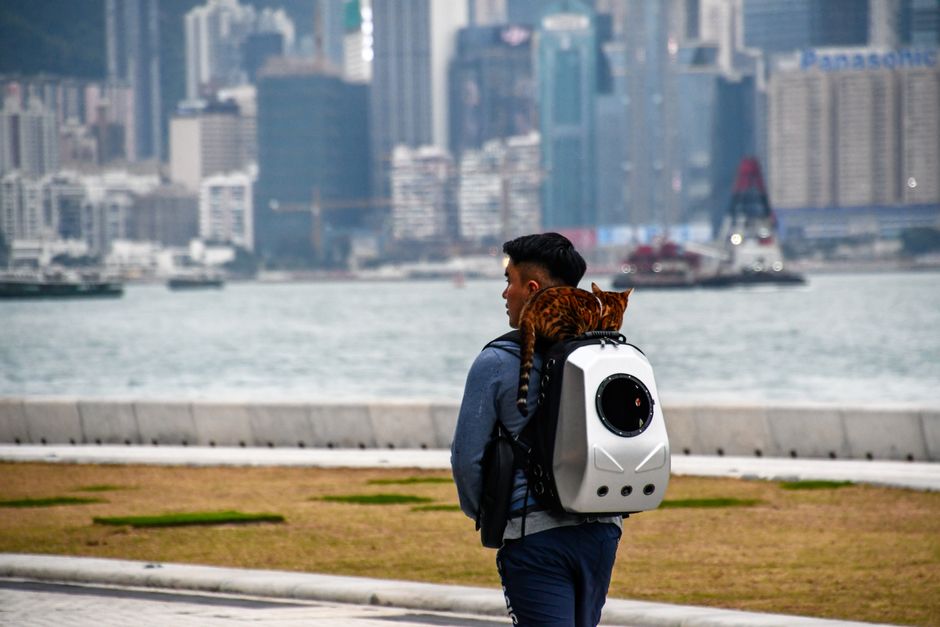
Hands free, and easy on a bus. She rides upright and sways with each step. Most are too tall for a plane seat.
🛞 Rolling
A small suitcase with a door. It saves your arm with a heavy cat. Wheels and handle make it too big for most under-seat gaps.
So which wins, soft or hard? For a car or a vet run, hard. For a plane, soft, because nothing else fits the gap. We put the two head to head in soft-sided vs hard cat carrier.
Then get the size right. Bigger is not kinder. A cat slides around in a roomy box every time you brake, so she should be able to stand up, turn around and lie flat, and no more. Measure her first with our cat carrier size guide.
What Crash Tests Found
A hard shell feels like armor. It is not.
So the plastic is not the safe part. The safe part is a carrier that stays joined to the car. That means a belt route the maker built in and then tested.
Very few carriers are crash certified, and the list is mostly dog crates. The Center for Pet Safety keeps the current one. If a crash is your main worry, shop off that list. Do not shop off the words "crash tested" printed on a box.
For everyone else, a plain hard carrier that is belted down is still far better than a loose one. Belting is the step that does the work.
Belting It Into the Car
Buying the right box is half of it. The other half takes ten seconds in your driveway. International Cat Care puts this first. Never travel with your cat loose in the car. Always use a robust carrier.
🚗 Before you start the engine, check:
- Belt through the maker's own strap or slot, not the handle
- Back seat, or the footwell behind a front seat
- A towel under it, so it sits level and soaks up an accident
- Nothing in the front passenger seat. An airbag can crush a carrier
- Nothing loose on a seat or rolling in the trunk
- No leash clipped to the cat inside
One more rule, for the walk in from the parking lot. International Cat Care says to hold the carrier underneath, not by the handle. The Feline Veterinary Medical Association says the same. It says that cuts the movement and keeps the box level.
A sling is not a car seat. We sell one, so we will say this plainly. A cat sling carrier holds your cat against your chest. It has no crash rating and no belt route. It is not safer than a carrier once the car is moving. It is for the short carry at either end of the drive, not the drive. We set out the whole argument in is a cat sling safe in a car.
Flying With a Cat
The size that matters is not printed on the box. It is the gap under the seat in front of you, and that gap changes with the plane.
Delta's pet page today recommends a soft kennel no bigger than 18 x 11 x 11 inches, and says the kennel must fit fully under the seat in front of you. Every airline prints its own numbers, and some change them by aircraft. Call your airline before you buy, and ask which plane you are booked on.
"Airline approved" on a label is a size claim by the seller. Nobody certifies it. "TSA approved" is not a thing at all. TSA screens your carrier. It does not approve one.
At security you carry the cat, and the empty bag goes through the scanner. It runs in this order:
-
1
Tell the first officer
Before you reach the belt. They point you to the right lane.
-
2
Load your other bags first
Coat, laptop, everything. The carrier goes last.
-
3
Lift the cat out
Harness and leash on before you unzip.
Why: VCA Animal Hospitals asks for a firm-fitting harness with a leash attached, to prevent escape. It is a backstop for the minute she is out, not how she travels.
-
4
Carry her through
The leash stays on. You walk the metal detector holding her. She never nears the X-ray.
-
5
Send the empty carrier down the belt
Pockets open, like any other bag.
-
6
Re-load at the re-composure area
Step out of the line first. Latch it before you lift it.
A top-loading door earns its price right here. You lift her out of the top instead of dragging her out of a front hole in a loud room.
If she is likely to bolt, ask for a private screening room before you unzip anything. TSA says an officer will walk you there with the cat still in her carrier.
Train the Cat Before You Need To
The best carrier in the world fails if she bolts at the sight of it.
The plan below is ours, not a vet's schedule. The Feline Veterinary Medical Association handout gives the same order, with no clock on it. Blanket, then the carrier. Then the door shut, then longer. Then lifted from the bottom. It also says to let her settle at each step. So start three weeks out. Go slower if she stalls.
-
1
Week 1: it lives in the room
Put it where she sleeps. Take the door off. Her own blanket inside, a treat dropped in now and then.
Why: she has to meet it on a day when nothing happens.
-
2
Week 2: dinner moves in
Feed her beside it, then just inside, then at the back. Once she eats in there, shut the door ten seconds while she chews.
-
3
Week 3: it moves
Lift her thirty seconds. Then a walk round the room. Then the car. Then five minutes around the block.
Why: stall at any rung and drop back one for a few days.
That last drive is the point of the whole plan. It teaches her that a car ride can end at her own kitchen. Right now every ride ends at the vet.
What to Spend
Is the pricey one really better than the cheap one? Sometimes. Here is what the extra money buys.
| Tier | You get | You risk | Best for |
|---|---|---|---|
| Cheapest tier | A box that holds a cat for a short trip. It will likely meet plane size rules. | Zips that split, thin mesh, no belt route, no crash test. | One vet trip a year, or a spare for a second cat. |
| Top tier | Tougher fabric, locking zips, a built-in belt route, a lift-off top, better airflow. | Paying for a feature set you never use. | Frequent flyers, long drives, and cats who fight the box. |
Price is not the same as safety. A cheap hard carrier that is belted in beats a pricey soft bag sitting loose on the seat. Spend on the belt route first, then on comfort.
Your Pick
You are buying three things at once: a box that fits the trip, a box that fits your cat, and a box you can strap down in ten seconds.
Get the hard-shell-and-belt setup right for the car. Get the under-seat size right for the plane. Then start the three-week plan tonight, because the box only works if she will walk into it.
If the wrestling match at your front door is the part you dread, that is a different problem from the drive.

For the door-to-car part
The walk out your front door is its own problem
None of this helps if you cannot get her to the car without a fight. The ComfyPaws sling holds her against your chest in breathable cotton, with an adjustable strap and a safety clasp, so both hands stay free. The belted carrier takes it from there.
See the ComfyPaws SlingQuestions this guide did not cover
Should I sedate her for the flight?
Usually no. VCA Animal Hospitals says that "most of the time, cats travel quite well, without needing medication." If yours is the exception, ask your own vet. Test any drug at home first, not at the departure gate.
Does she need a health certificate?
Probably. VCA says most airlines require a valid health certificate completed by your veterinarian, and to book that vet visit close to the date of travel. Crossing a border adds more. USDA APHIS says meeting those requirements takes time, so do not delay.
Where does she pee on a two-day drive?
Line the bottom, plan the stops. VCA says to lay an absorbent puppy pad in the carrier and to carry spares. On the road it also says to offer water at any rest stops, and that a large kennel has room for a small litter pan inside.
The shelter sent her home in a cardboard box. Can I keep using it?
No. International Cat Care is blunt: cardboard is no match for a determined cat. It also wants one that is easy to clean, preferably plastic or plastic-coated. Use it to get her home, then buy the real thing.
Related reading
- Soft Sided vs Hard Cat Carrier: 2026 Guide to Choose the Best
- Best Cat Carrier for Vet Visits: 6 Picks Ranked by What the Clinic Sees
- Cat Travel Sickness: Signs, Causes, and What Actually Helps in the Car
- Escape Proof Cat Carrier: Security Features That Actually Work
About this article
Written by the PetzyMart Team. Sources include American Association of Feline Practitioners (AAFP), centerforpetsafety.org, International Cat Care, delta.com, VCA Animal Hospitals, tsa.gov and aphis.usda.gov, linked where each claim appears in the text. Reviewed and updated September 19, 2026. For medical decisions about your individual cat, always consult your veterinarian.